
Marino Marini
Italian, b. February 27, 1901, Pistoia, Tuscany, Italy – d. August 6, 1980, Viareggio, Tuscany, Italy
Marino Marini Foundation
Marino Marini was an Italian sculptor and painter celebrated for his modern reinterpretations of classical forms, particularly his recurring motif of the horse and rider. He studied painting at the Accademia di Belle Arti in Florence, where he soon turned to sculpture, influenced by Etruscan and Roman art as well as the early Renaissance masters of his native region.
In the 1920s and 1930s, Marini’s style evolved from smooth, idealized figures toward a more expressive and emotional language. His sculptures of riders on horseback became his most iconic theme—symbols of human struggle, balance, and the fragile relationship between man and nature. After witnessing the turmoil of World War II, his horse-and-rider figures grew increasingly dramatic and fragmented, reflecting a sense of loss and existential anxiety.
Marini taught at the Accademia di Brera in Milan and exhibited internationally, achieving major recognition at the Venice Biennale (where he won the Grand Prize for Sculpture in 1952) and in retrospectives at the Guggenheim Museum and other institutions. His work bridged the gap between classical sculpture and modern abstraction, influencing generations of postwar artists.
His legacy endures through the Museo Marino Marini in Florence and the Fondazione Marino Marini in Pistoia, both dedicated to preserving and promoting his art and vision.
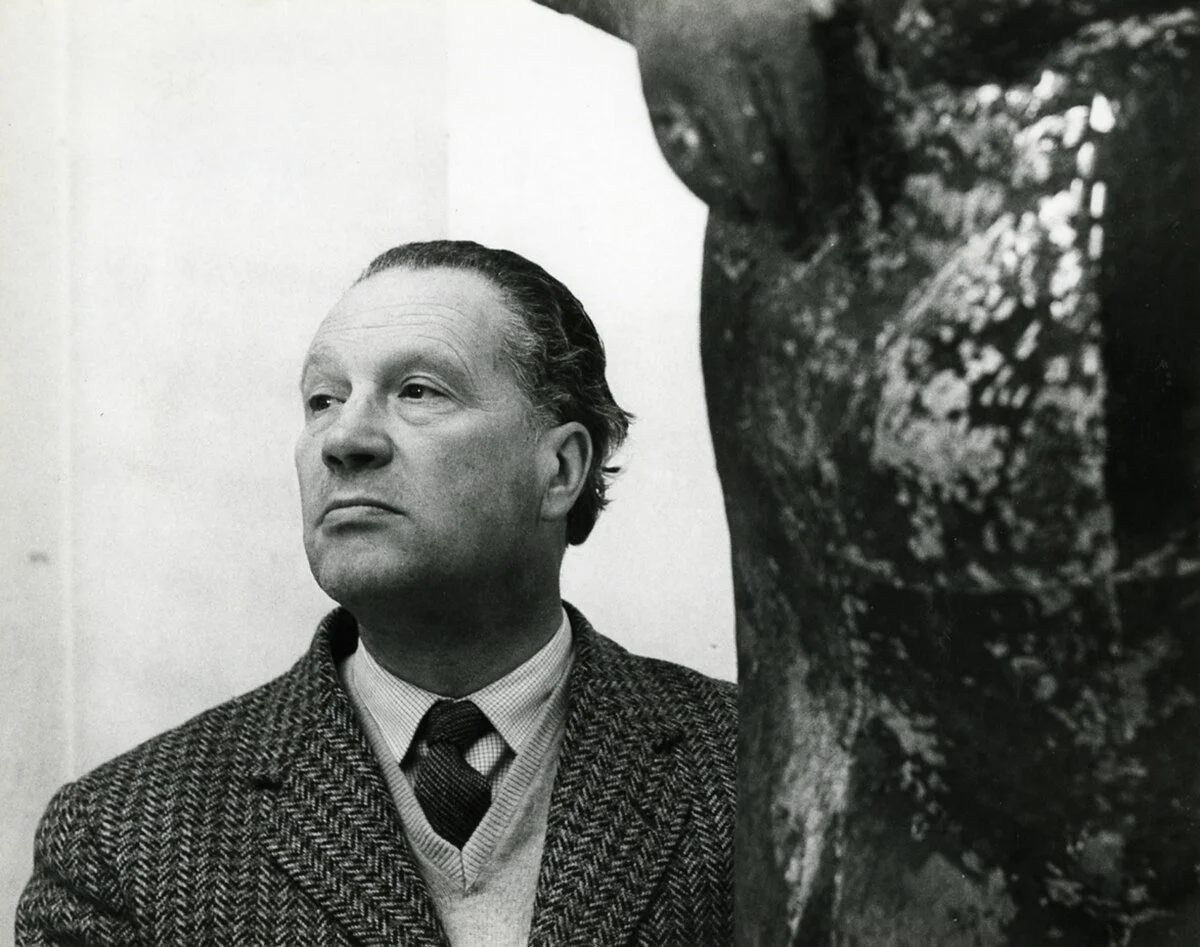
Milano, 1958
