
John Grillo
John Grillo (1917–1994) was an American Abstract Expressionist painter whose work bridged the raw emotional energy of postwar abstraction with a refined sense of structure and color. Born in Lawrence, Massachusetts, Grillo came of age during a formative period in American art, studying at the Museum School of Fine Arts in Boston before continuing his education in New York. There he became immersed in the burgeoning Abstract Expressionist movement, absorbing influences from artists such as Willem de Kooning and Franz Kline while forging a visual language distinctly his own.
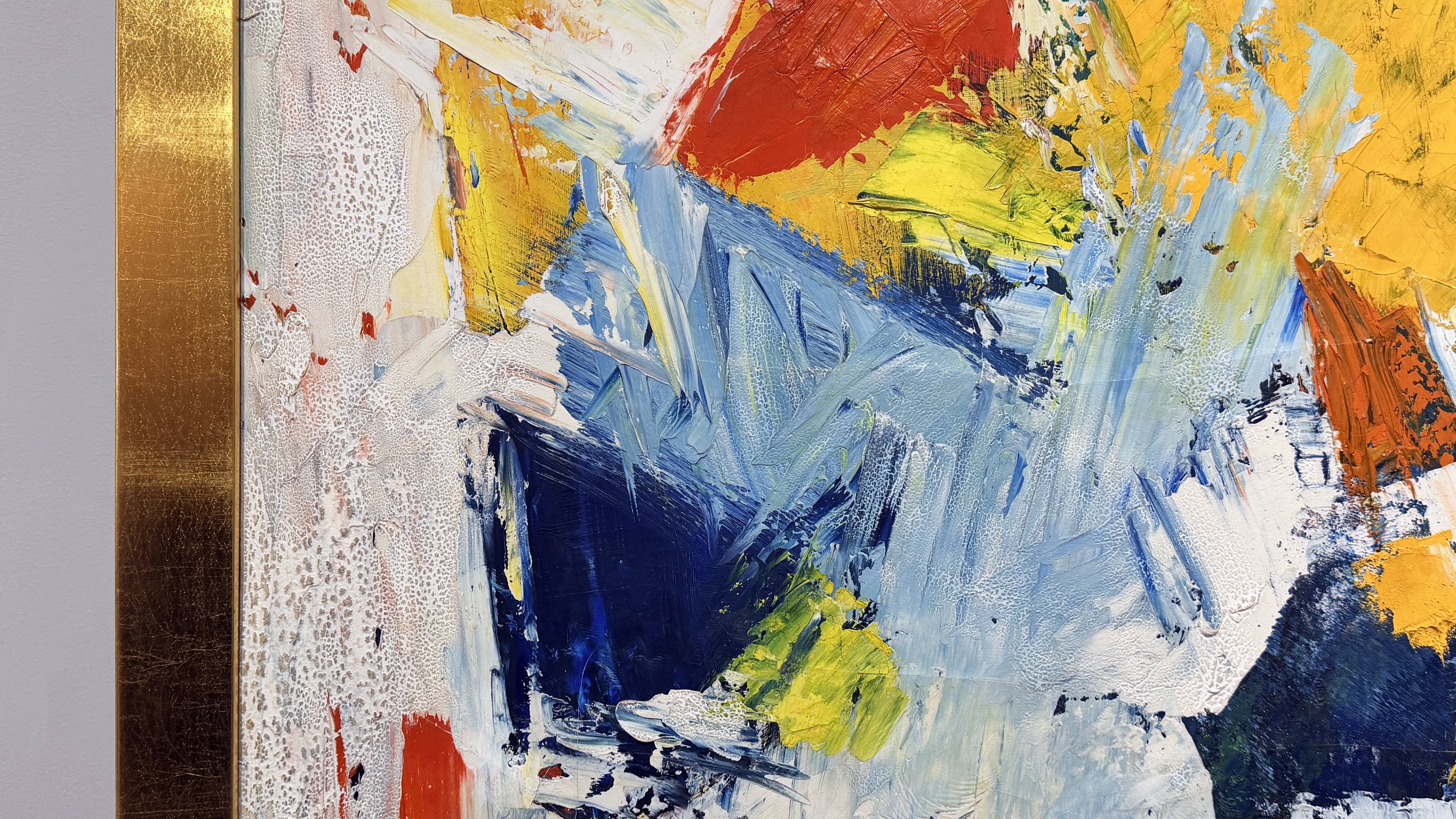
Grillo’s paintings are characterized by bold, gestural brushwork, dynamic compositions, and a nuanced balance between spontaneity and control. While often associated with action painting, his work reveals a strong underlying architecture—blocks of color, rhythmic forms, and carefully considered spatial relationships that give his canvases both immediacy and permanence. His palette ranges from stark black-and-white compositions to richly saturated fields of color, reflecting a lifelong exploration of emotional intensity through abstraction.
Throughout his career, Grillo exhibited widely and received numerous accolades, including a Guggenheim Fellowship and the Prix de Rome, which allowed him to study and work in Italy. His work entered major museum collections, among them the Museum of Modern Art, the Whitney Museum of American Art, and the Smithsonian American Art Museum. Today, John Grillo is recognized as an important figure of the second generation of Abstract Expressionists—an artist whose work captures the vitality, ambition, and evolving spirit of American abstraction in the mid-20th century.
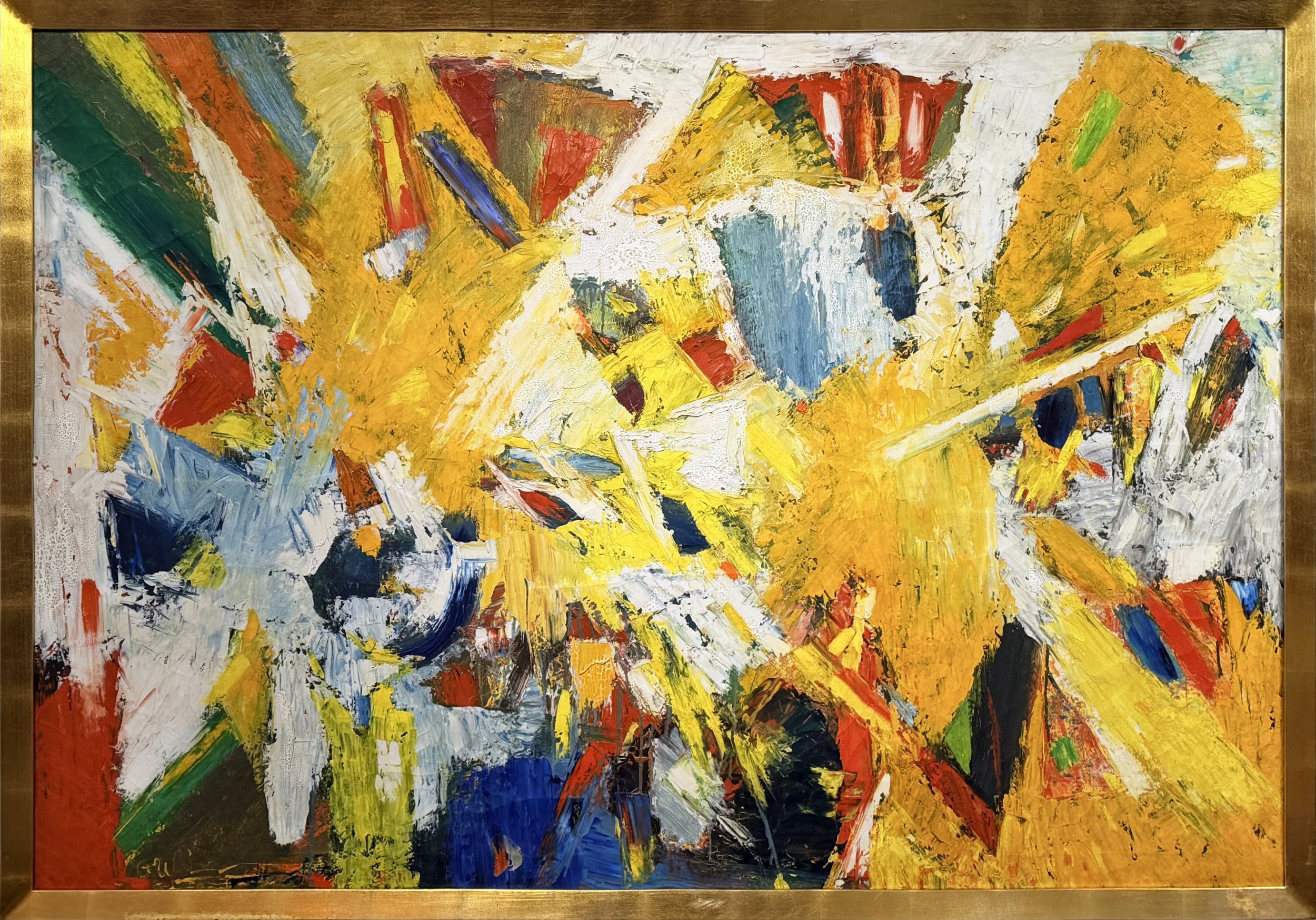
Metamorphic Prism, 1961
oil on canvas, 51 × 74 in
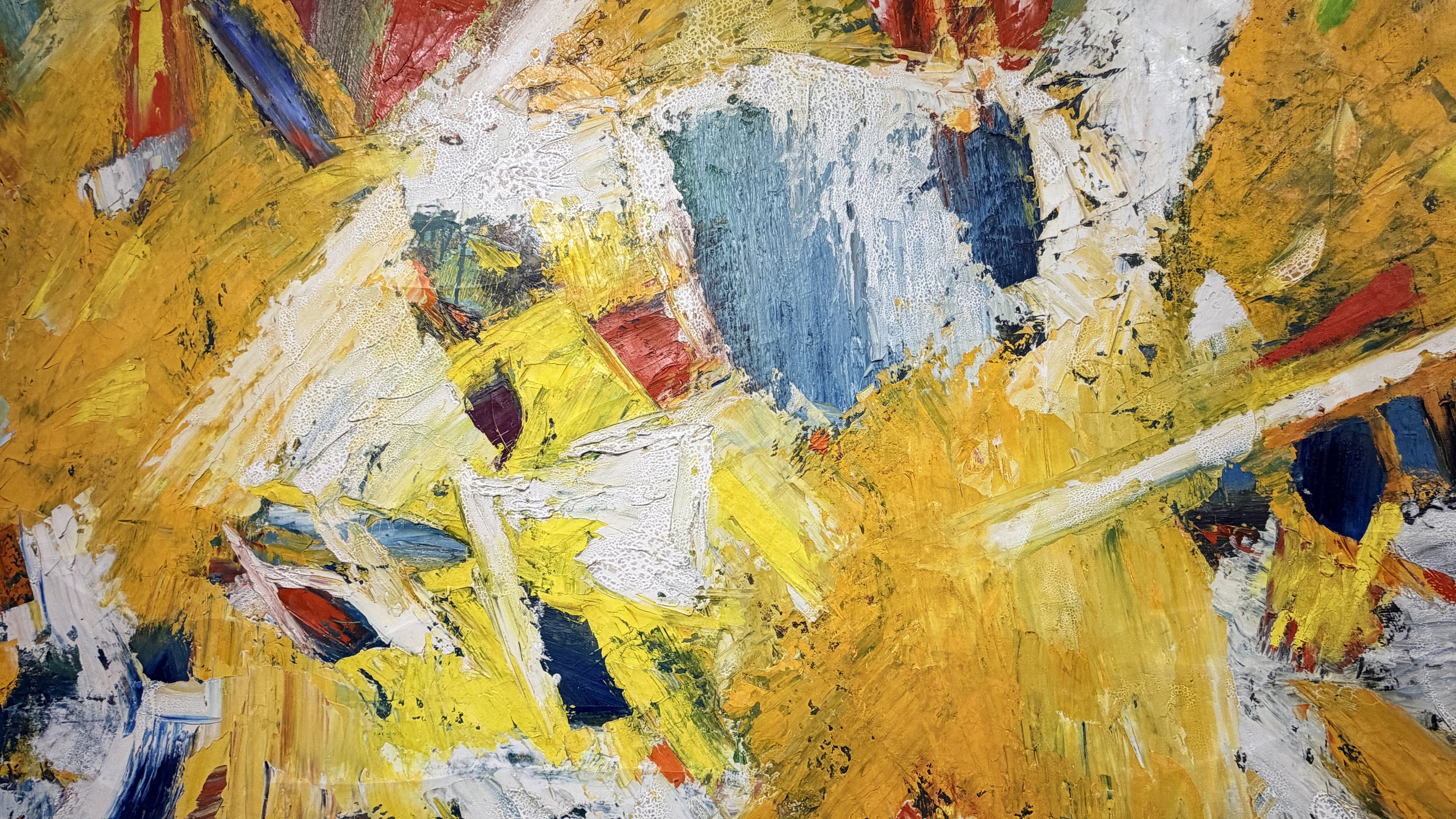
Detail
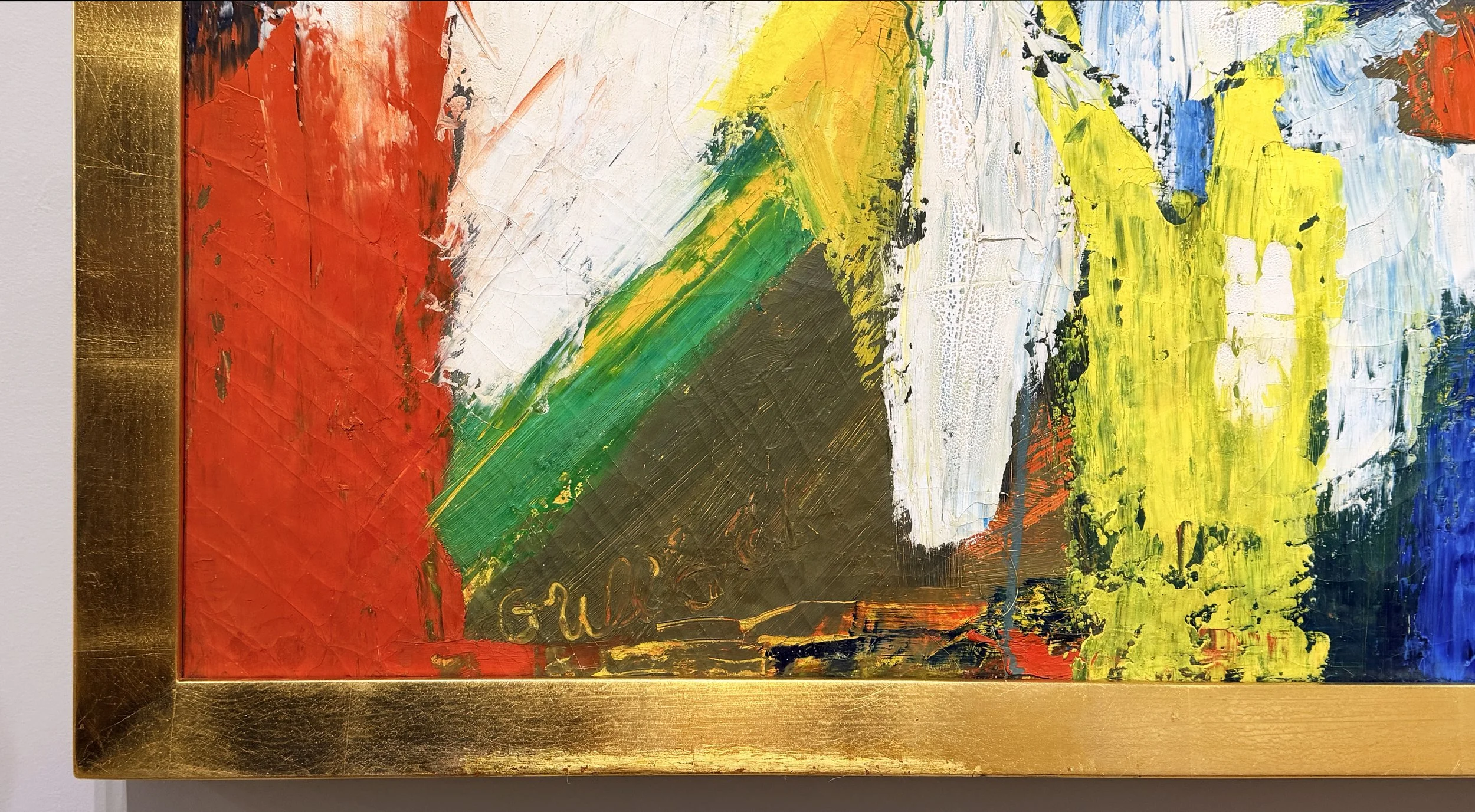
Detail
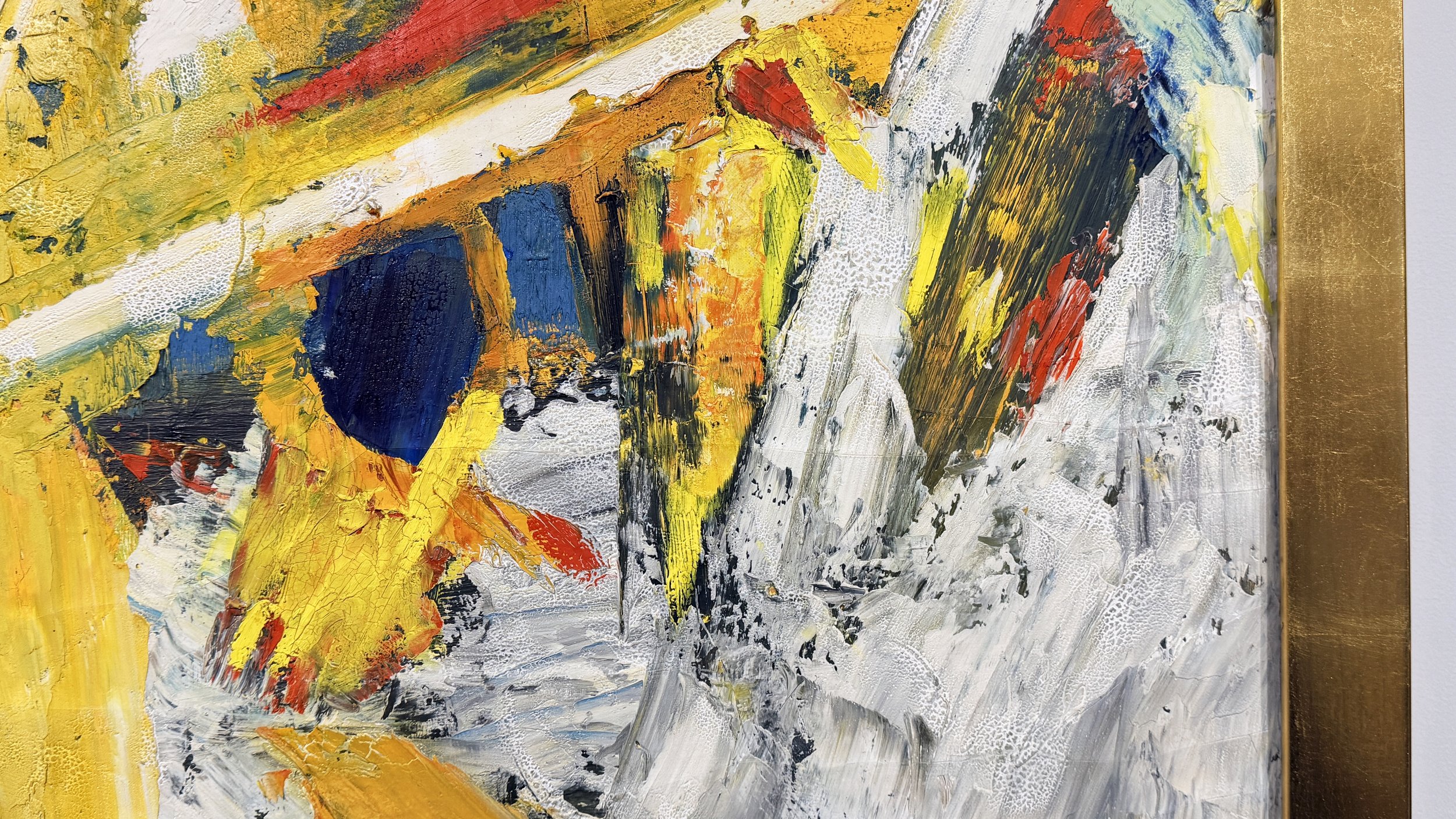
Detail
Detail
