
Adolph Gottlieb
American, b. March 14, 1903, New York City, New York - d. March 4, 1974, New York City, New York
gottliebfoundation.org
Adolph Gottlieb was one of the leading figures of the Abstract Expressionist movement, a generation of artists who redefined modern painting in postwar America. Born in New York City, Gottlieb was deeply immersed in the city’s artistic and intellectual life from a young age. After studying at the Art Students League, he traveled extensively through Europe, absorbing influences from modernists like Paul Klee and Joan Miró. These early encounters with European abstraction informed his lifelong pursuit of a visual language that could express universal human emotions through abstract form.
By the 1940s, Gottlieb had emerged as a central figure among the “New York School” of painters, alongside contemporaries such as Mark Rothko, Barnett Newman, and Clyfford Still. He believed that abstract art could communicate as powerfully as any figurative image, describing his work as a search for symbols that speak to the “common language of emotional life.” His Pictographs series from the early 1940s introduced a grid-like arrangement of archetypal symbols—eyes, hands, suns, and bursts of energy—that evoked myth, ritual, and the subconscious. These works bridged Surrealism and pure abstraction, helping to define a distinctly American visual vocabulary.
In the 1950s and ’60s, Gottlieb developed his iconic Burst paintings, in which a floating disc of color hovers above an explosive tangle of gestural brushwork. These bold, minimal compositions distilled the tension between order and chaos, intellect and emotion—a balance central to Gottlieb’s vision. The Bursts remain some of the most enduring images of Abstract Expressionism, emblematic of the movement’s intensity and spiritual ambition.
Throughout his career, Gottlieb was also a vocal advocate for artists’ rights and the autonomy of modern art. He was among the signatories of the 1943 letter to The New York Times defending abstract art against conservative criticism, and he later served as a founding member of the Federation of Modern Painters and Sculptors. His legacy endures not only in his powerful imagery but also in his belief that art must be a direct, honest expression of human experience—beyond narrative, beyond style, reaching into the shared depths of feeling and imagination.
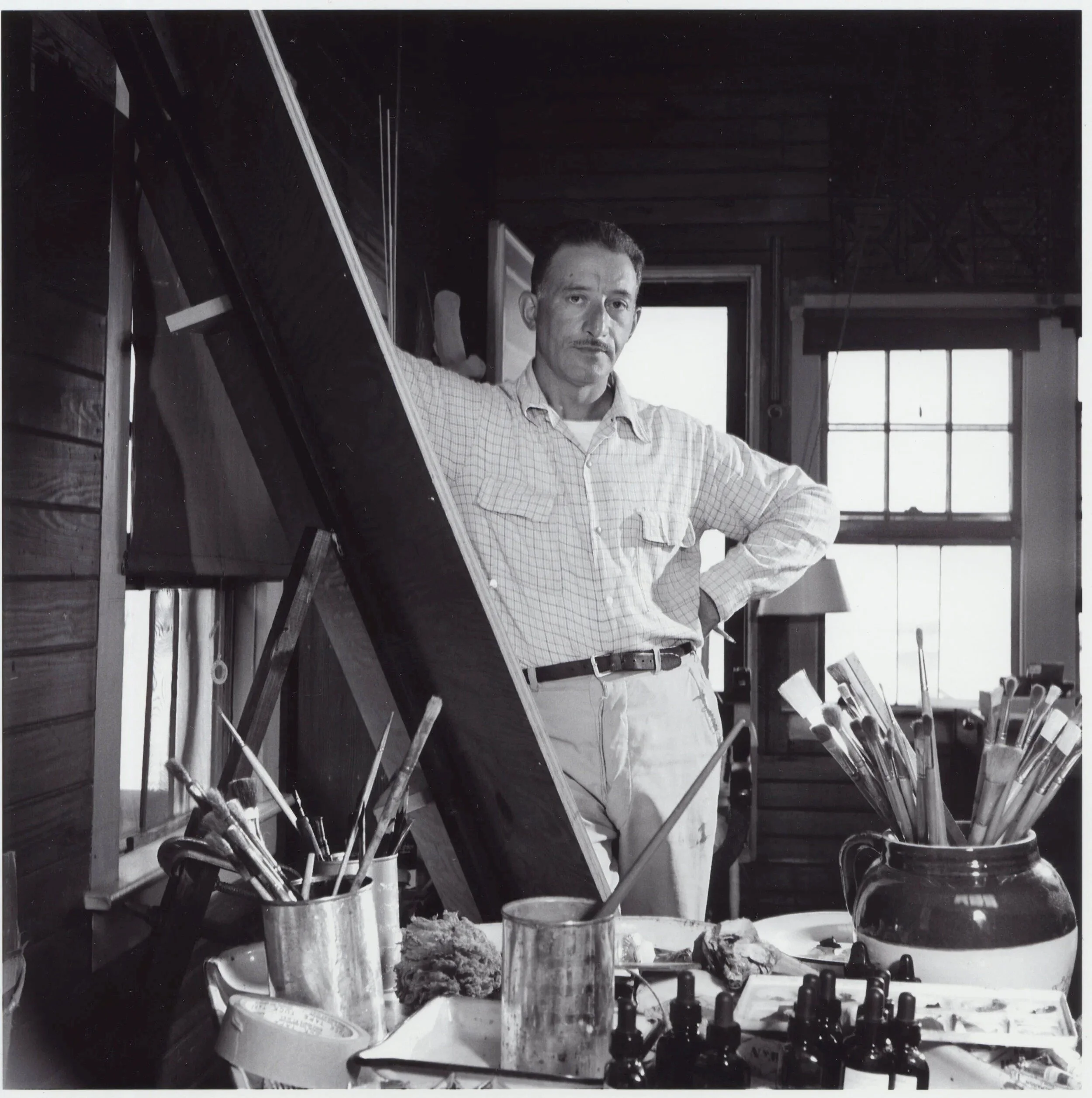
1952, Provincetown, Massachusetts
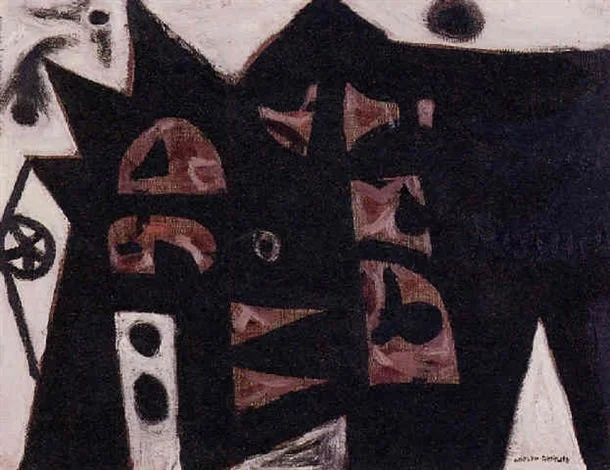
Castle I, 1950
oil on linen mounted on masonite, 14 x 18 in
Price on request
